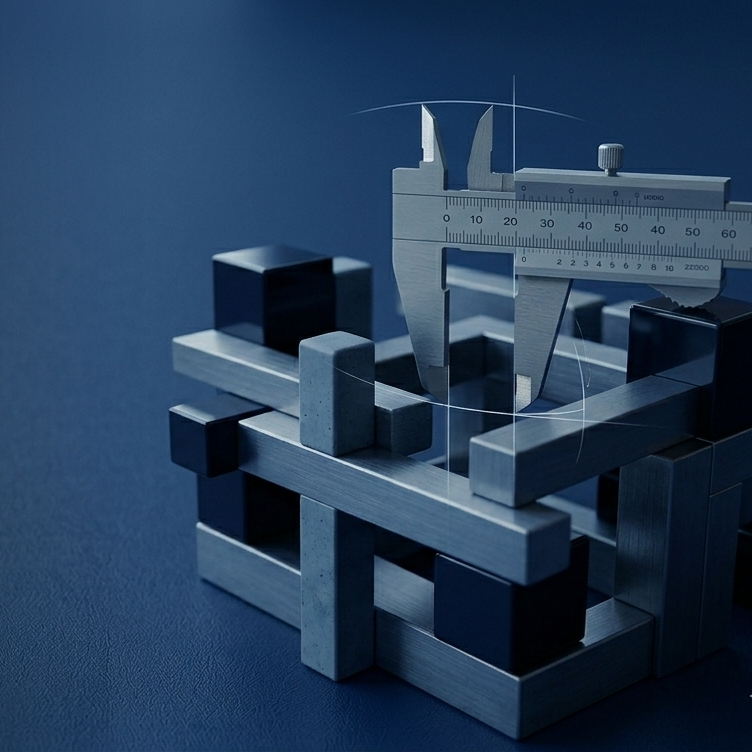
Decisions shape durability
Structure determines whether they create optionality — or erode it.
Explore our latest analysis on capital, governance, and institutional resilience for leaders navigating consequential inflection points.
85%
of global leaders believe that strategic foresight and long-term scenario planning are essential to sustaining competitiveness in the next decade. — World Economic Forum, Future of Strategy Insights Survey 2024
79%
of CEOs report that building organizational resilience through systems and partnerships is now a top strategic priority. — Accenture, Resilient Futures Report 2024
67%
of senior executives say their organizations are not prepared to respond effectively to future disruptions. — McKinsey & Company, The State of Organizations 2023
Most failures are structural. Few are sudden.
Breakdowns are rarely triggered by a single event.
They emerge from accumulated decisions — misaligned incentives, unchecked concentration, capital missteps, and governance drift.
The patterns are visible long before the outcome.
Capital Disciplline & Strategic Optionality
Bana Soumetho | 02/18/2026
Strategic Optionality
Bana Soumetho | 01/07/2026
85%
of global leaders believe that strategic foresight and long-term scenario planning are essential to sustaining competitiveness in the next decade. — World Economic Forum, Future of Strategy Insights Survey 2024
79%
of CEOs report that building organizational resilience through systems and partnerships is now a top strategic priority. — Accenture, Resilient Futures Report 2024
67%
of senior executives say their organizations are not prepared to respond effectively to future disruptions. — McKinsey & Company, The State of Organizations 2023
Four Domains—Enduring Intersections.
Capital allocates risk.
Governance distributes authority.
Structure determines durability.
These forces do not operate independently. Their intersection defines whether organizations expand optionality — or accumulate fragility.
Explore Privia’s four domains of structural analysis.
Structural Risk
How fragility accumulates through misaligned incentives, concentration, and unchecked complexity.
Capital Discipline
The financing, allocation, and timing decisions that expand — or constrain — strategic optionality.
Governance & Control
Decision architecture, accountability design, and institutional maturity across scaling organizations.
Strategic Optionality
The structural evolution required for growth, succession, and capital transitions.
Clarity Is a Structural Advantage.
Complexity does not create risk. Misaligned structure does.
Privia examines how capital allocation, governance design, and decision architecture shape long-term outcomes — and how disciplined structure expands strategic optionality.
Because durability is engineered long before it is tested.
Structural Signals
Most structural breakdowns are visible before they become consequential.
We track how leaders are navigating structural risk, capital discipline, and governance complexity — not to predict outcomes, but to understand where pressure is accumulating.
Contribute perspective to the current signal survey.
Structural Risk
Where Is Fragility Quietly Compounding? Structural risk rarely appears as a single event. It accumulates through concentration, unchecked complexity, and incentive drift — often during periods of apparent strength. Share where pressure is building.
Hidden Exposure
Compounding Risk
Incentive Drift
Capital Discipline
Are Capital Decisions Expanding — or Limiting — Freedom? Capital structure shapes optionality long before results reflect it. Allocation, liquidity posture, and financing timing determine whether strategic flexibility increases or contracts. Indicate how your capital posture is evolving.
Allocation Discipline
Liquidity Tension
Optionality Compression
Governance & Control
Is Authority Structured — or Informal? Durability depends on how decision rights are defined, accountability is enforced, and control evolves with scale. Ambiguity compounds under pressure. Describe the state of governance clarity in your organization.
Authority Drift
Accountability Gaps
Control Evolution
85%
of global leaders believe that strategic foresight and long-term scenario planning are essential to sustaining competitiveness in the next decade. — World Economic Forum, Future of Strategy Insights Survey 2024
79%
of CEOs report that building organizational resilience through systems and partnerships is now a top strategic priority. — Accenture, Resilient Futures Report 2024
67%
of senior executives say their organizations are not prepared to respond effectively to future disruptions. — McKinsey & Company, The State of Organizations 2023